
-
Pre-K1
Montessori Pre-K1 in Winnetka, CA
-
Ages 3 to 4 Years
At three, a child becomes ready for something new: sustained, self-directed concentration. Pre-K1 is where that capacity is discovered and protected.
The Three-Hour Work Cycle
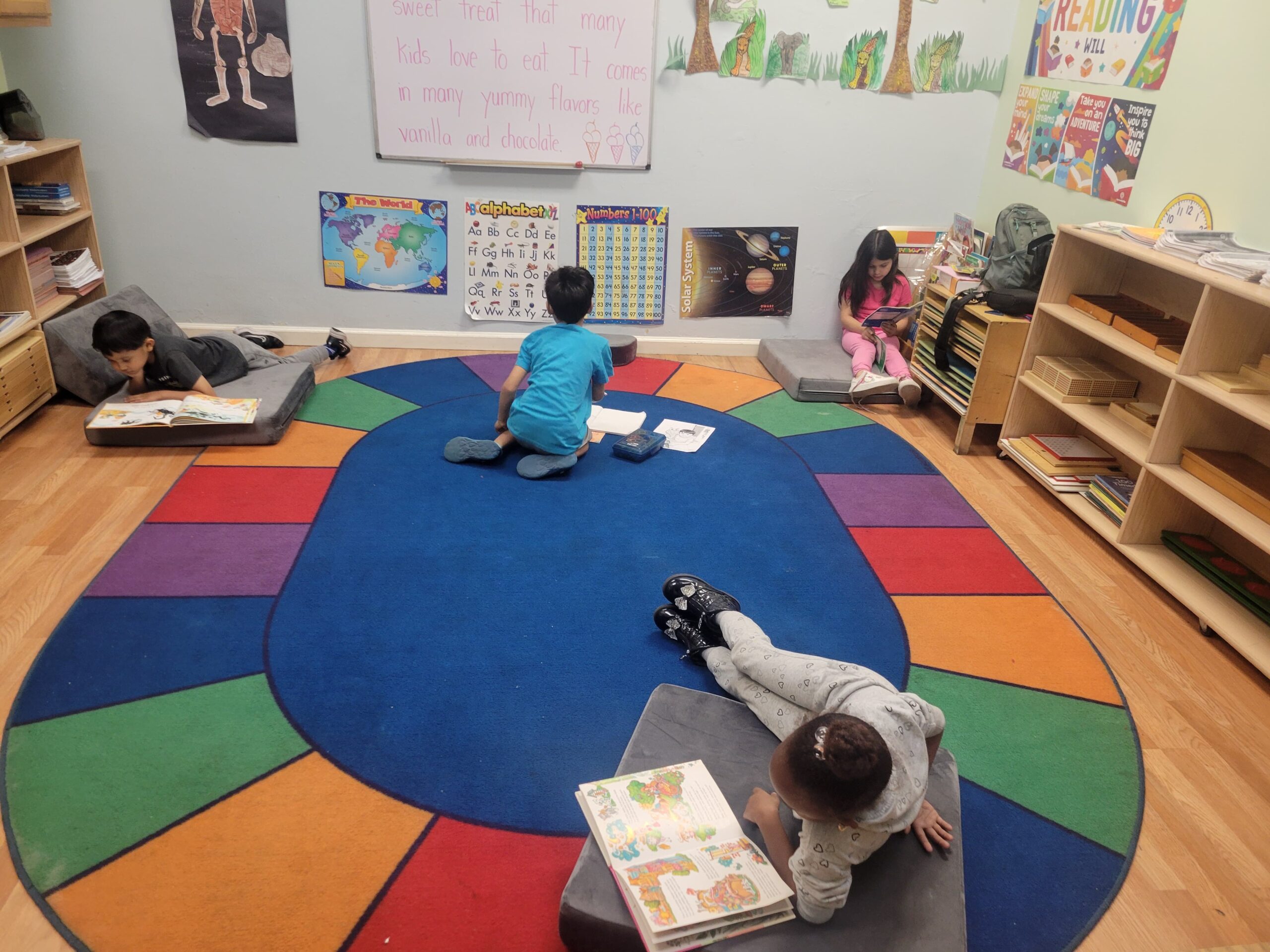
Our morning is not divided into fifteen-minute blocks. Children have an uninterrupted stretch of time to choose their work, settle into it, and stay with it as long as it holds them.
This matters more than it might sound. Deep concentration in a young child is fragile and easily broken — and it is also the foundation of everything academic that follows. A four-year-old who has spent forty minutes absorbed in a single task has built an attention span that a worksheet cannot produce.
Children choose their own work from the shelves. A guide gives an individual lesson on a material, and afterward the child is free to return to it as many times as she wishes.
Sensorial Materials
The Montessori sensorial materials — the Pink Tower, the Brown Stair, the Red Rods, the color tablets, the geometric solids — look like beautiful toys and function as something else entirely.
Each isolates a single quality: size, length, weight, color, shape, sound. By handling them, a child sorts the flood of sensory information from the world into categories she can name and compare. She is also, without knowing it, handling the decimal system and the concepts of geometry in physical form, years before either is named.
Early Literacy and Numeracy
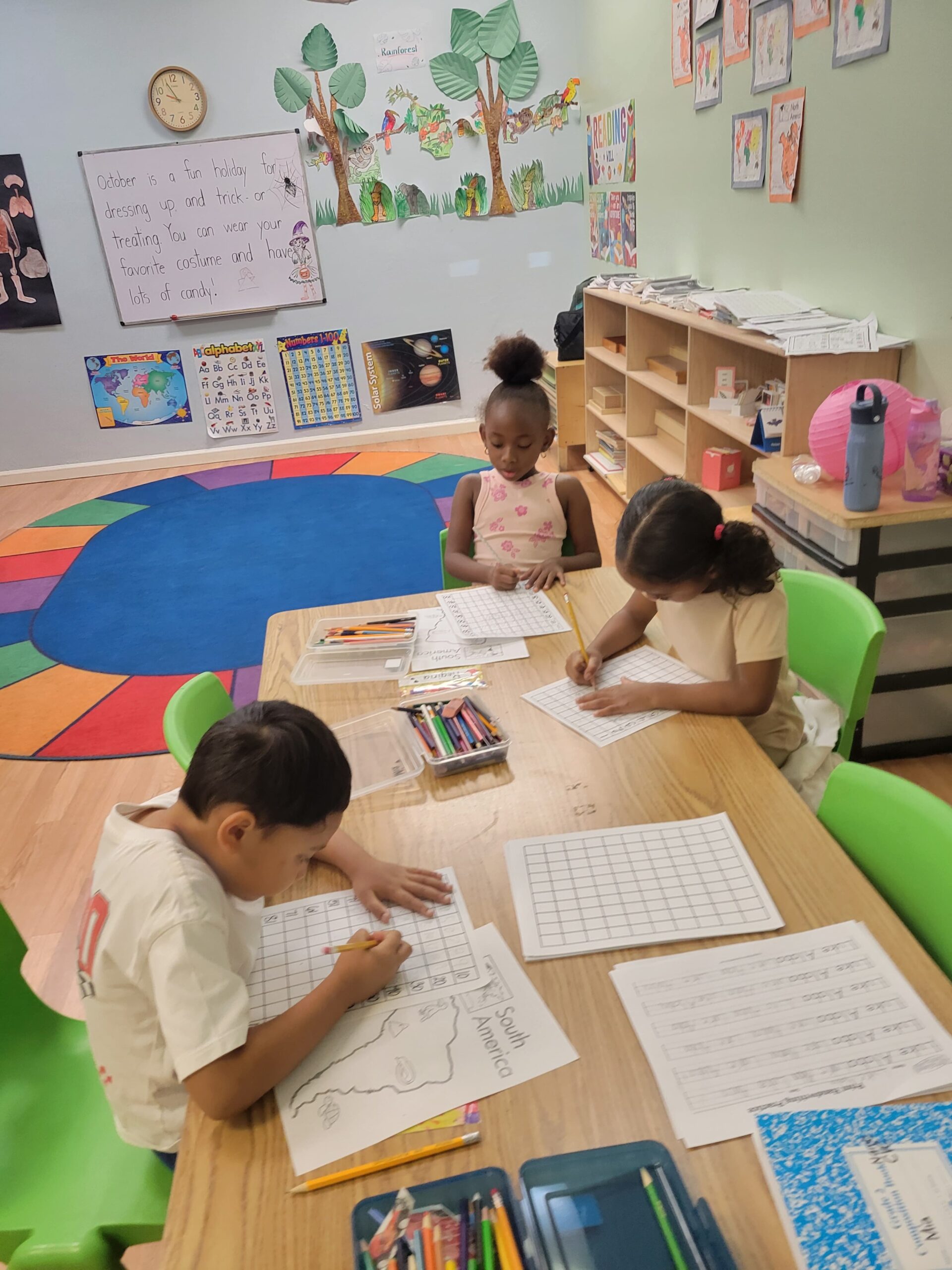
Children trace sandpaper letters with two fingers, feeling the shape while hearing the sound. Writing comes before reading in a Montessori classroom — children compose words with the Movable Alphabet before they can decode a printed page, and reading tends to arrive suddenly, as a discovery rather than a drill.
In mathematics, number rods and spindle boxes give quantity a physical form a child can carry. One is light. A thousand is heavy. The abstraction comes later and lands on solid ground.
Mixed Ages
Our classrooms span ages rather than sorting children into single-year cohorts. Younger children learn by watching older ones. Older children consolidate what they know by explaining it. Nobody is the slowest or the fastest in a room where everyone is working on something different.
Learn More